The family transitions too
Identity loss after service is rarely the veteran's alone, partners and families carry their own.

When a person leaves a defining institutional career, the change is usually framed as theirs alone. The research suggests otherwise. The people closest to them, partners, spouses and families, frequently undergo an identity transition of their own, and it is one that almost no support structure is designed to recognise.
A 2024 qualitative study published in the Journal of Military, Veteran and Family Health, based on interviews with thirty-seven current and former partners of UK veterans, found that military life shaped partner identity and wellbeing both during and after service. Participants described the pull of military identity and culture, the weight of role-based identities, and a loss of personal identity over time. Many had built a sense of self around service to others, often at the expense of their own, with lasting effects on self-esteem and confidence reported well beyond the end of service.
This matters for two reasons. The first is that it widens the question at the centre of this work. If identity, not employment, is the deeper challenge of transition, then identity disruption does not stop at the person who served; it moves through the household. The second is that this population is very nearly invisible. There is no equivalent of resettlement support for the partner who reorganised their own life around someone else's career, and who must now work out who they are as that career ends.
It is worth being clear about what this evidence is and is not. It is published, secondary research that establishes the presence and significance of partner and family identity change. It is not a claim drawn from this project's own primary interviews, and it makes no clinical claim. What it does is mark out a gap, a recognisable, evidenced gap, that a serious account of transition cannot leave out.
The identity question, in other words, is a family question. As this project's interview work develops, the experiences of partners and families remain part of the picture it is committed to following, with the same care and the same caveats applied to every other strand of the research.
This note draws on published research, including Who am I? A qualitative exploration of the identities of spouses/partners of UK Armed Forces Veterans (Journal of Military, Veteran and Family Health, 2024; DOI 10.3138/jmvfh-2023-0068), as synthesised in the project's Identity Loss in Transition Proof of Concept paper.
© 2026 Gemma Gardner. AURIS Identity System™. All rights reserved.
More from News & Insights
 Research note · August 2026
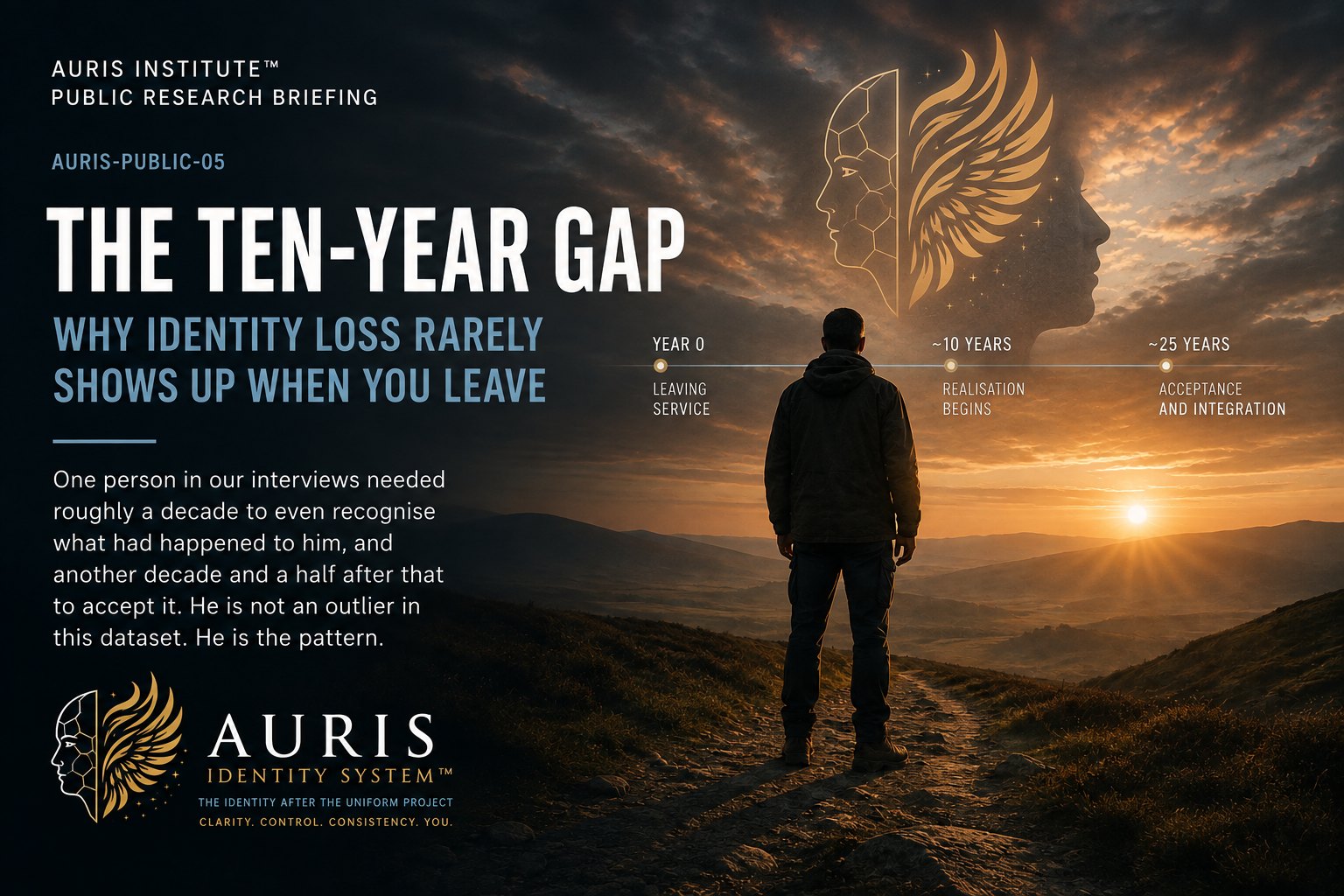
The Ten-Year Gap
One person in our interviews took roughly ten years to even notice what had happened to him. Then another fifteen to accept it. He isn't an outlier in this dataset. He is the pattern.
 Research note · July 2026
Why Identity, Not Employability, Is the Real Transition Crisis
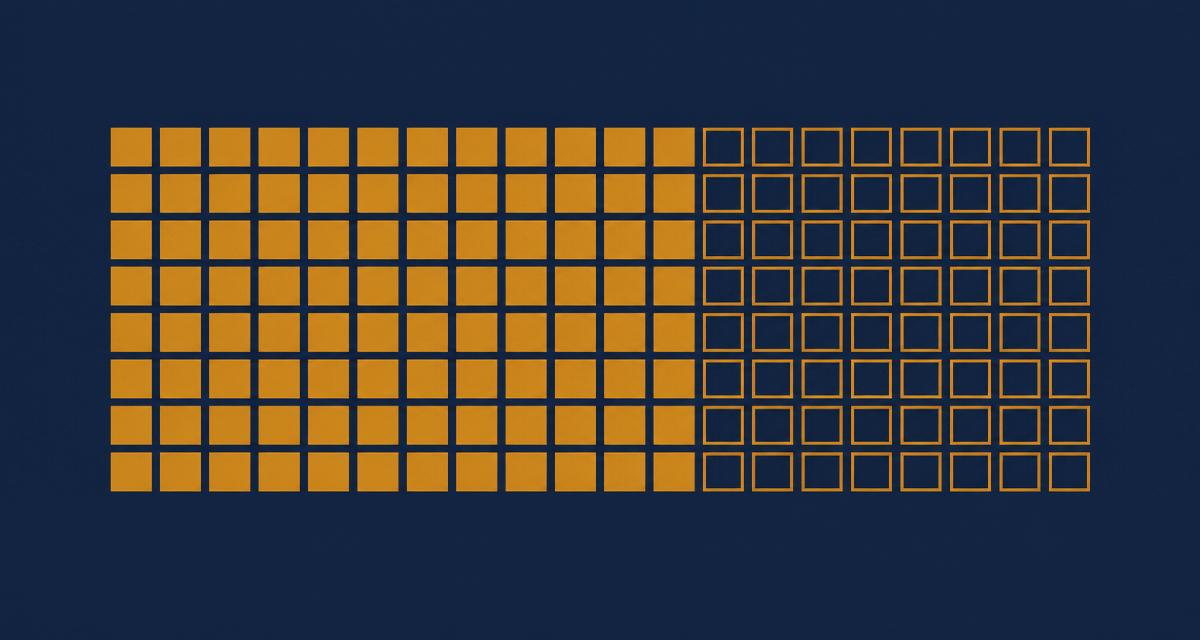
86% of service leavers find a job within six months. Almost none of them are asked whether they know who they are without the uniform on.
 Research note · July 2026
Inside the Evidence: What We Know, What We Don't, and Why We're Still Testing
Most organisations publish their findings. Very few publish their gaps.
 Research note · July 2026
From Research to Practice: The Pilots and the Four Questions They're Answering
A pilot is not a proof point, it's a live test of a question we genuinely don't know the answer to yet.
 Essay · July 2026
Why This Matters Now: Policy, Partners and What Comes Next
In June 2026 we took this research to Parliament, before every question was answered, because evidence-first engagement matters more than waiting for certainty that may take years to arrive.
 Essay · May 2026
When the uniform comes off
Why identity, not employment, is the deepest challenge of military transition.
 Announcement · March 2026
The AURIS Identity System is open at aurisidentity.com
A quiet, private companion for the work, available now in the browser.