8 resources
White Papers
Long publications from the AURIS research programme. Every paper says what stage it is at, how it was done and what it cannot yet show. This is the permanent home for AURIS white papers.
Explore this subject →“Take away your opinion, and there is taken away the complaint.”
AURIS KNOWLEDGE HUB
When a role, routine or sense of direction changes, understanding can be a useful first step. Find clear explanations, explore the evidence or read someone else’s perspective.
Find something useful to read ↓Reading is open. You do not need to answer questions or create an account.
THE LIBRARY
Search guides, research, white papers and Insights together. You can read without an account or sharing your story.
50 resources in the library. Page 1 of 9.
Guide · 1 min read
Identity refers to the organised and evolving sense of who you are across time, roles and relationships. Identity-related processes are associated with how people interpret, decide, regulate and connect, but effects vary by context.
Read guide →Guide · 1 min read
Occupational transition is the structured change of a person's primary role, leaving the military, the NHS, emergency services, elite sport or another high-identity occupation.
Read guide →Guide · 1 min read
Identity Performance Psychology (IPP) is AURIS's proposed applied field of inquiry examining how identity structure, disruption and adaptation interact with regulation, behaviour and sustainable functioning or performance. Its integrated AURIS framework is being tested; the component sciences are established, but the five-pillar sequence and its incremental effects are not yet validated.
Read guide →Guide · 1 min read
AURIS is a five-pillar framework, Awareness, Understanding, Regulation, Identity, Stability, designed to support people through identity disruption and occupational transition.
Read guide →Guide · 4 min read
A verified, worldwide directory of support organisations, events and opportunities, built into the AURIS Identity System because the research kept showing the same problem: the right support usually exists, it is just hard to find.
Read guide →Guide · 1 min read
Identity can shape how people understand a change in role, relationships or direction. Explore why it may matter alongside practical needs, without assuming everyone has the same experience.
Read guide →Search checks titles, summaries and published text. Topic filters use recorded tags for library articles and matching topic words for Insights.
Browse the topic index →BROWSE BY SUBJECT
8 resources
Long publications from the AURIS research programme. Every paper says what stage it is at, how it was done and what it cannot yet show. This is the permanent home for AURIS white papers.
Explore this subject →6 resources
Start here. These cornerstone articles explain identity, occupational transition, Identity Performance Psychology and the AURIS Identity System in clear, evidence-led language.
Explore this subject →9 resources
An organised home for AURIS publications, pilot programmes and research methods. This section grows as new work is published.
Explore this subject →8 resources
Plain-English explanations of the psychological concepts that sit underneath the AURIS Identity System, from social identity to behaviour change.
Explore this subject →7 resources
Each article focuses on a high-identity transition: what changes, what is commonly missed, and how AURIS supports it.
Explore this subject →12 publications
Essays, research notes, interviews and announcements. Publication dates and content types help you put each piece in context.
Explore Insights →RECENT WRITING
Essay · 12 November 2026
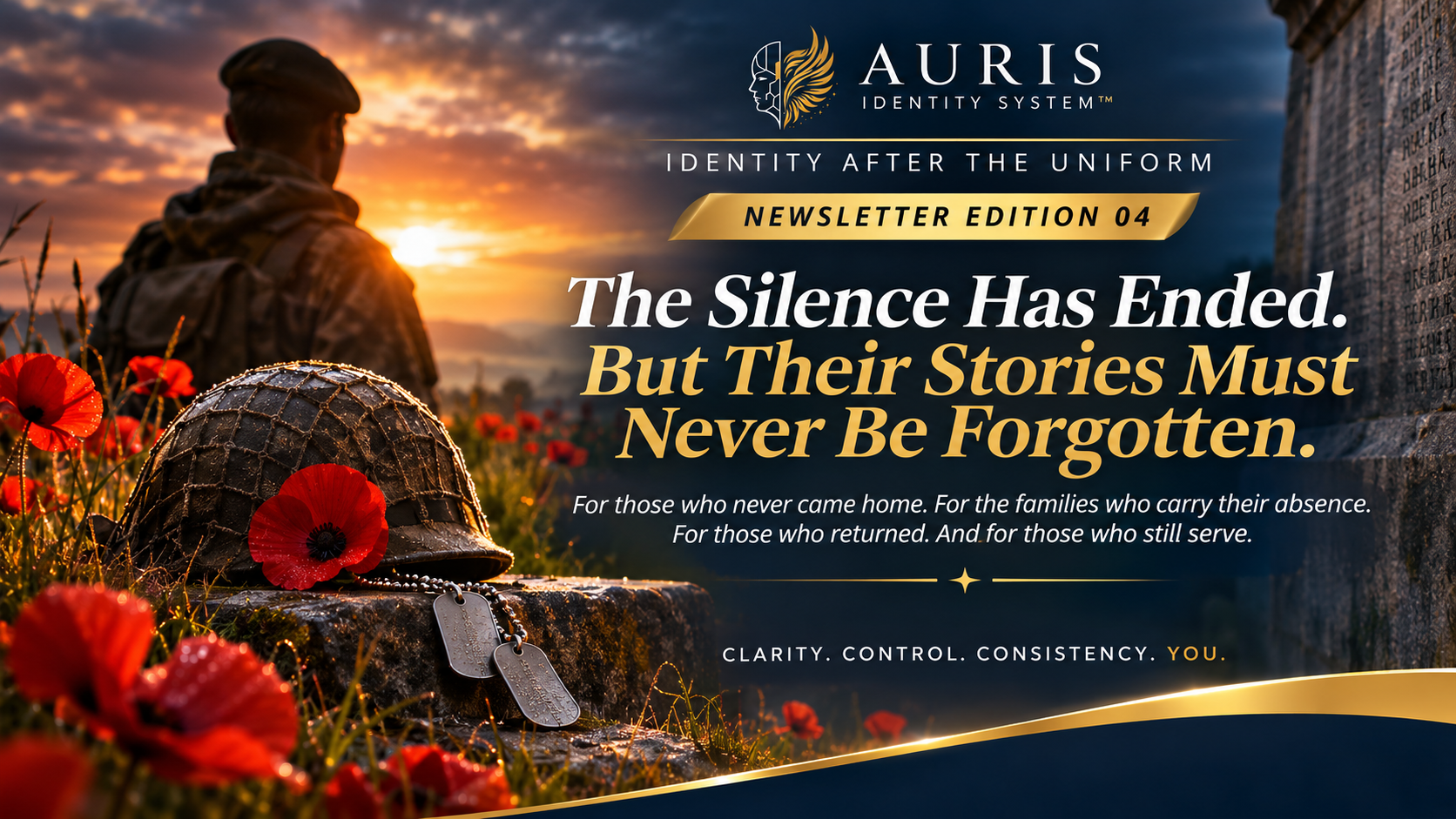
A Remembrance Sunday reflection on the fallen, bereaved families, veterans and serving personnel, and the care that continues after the ceremonies end.
Read this Insight →Essay · 12 November 2026
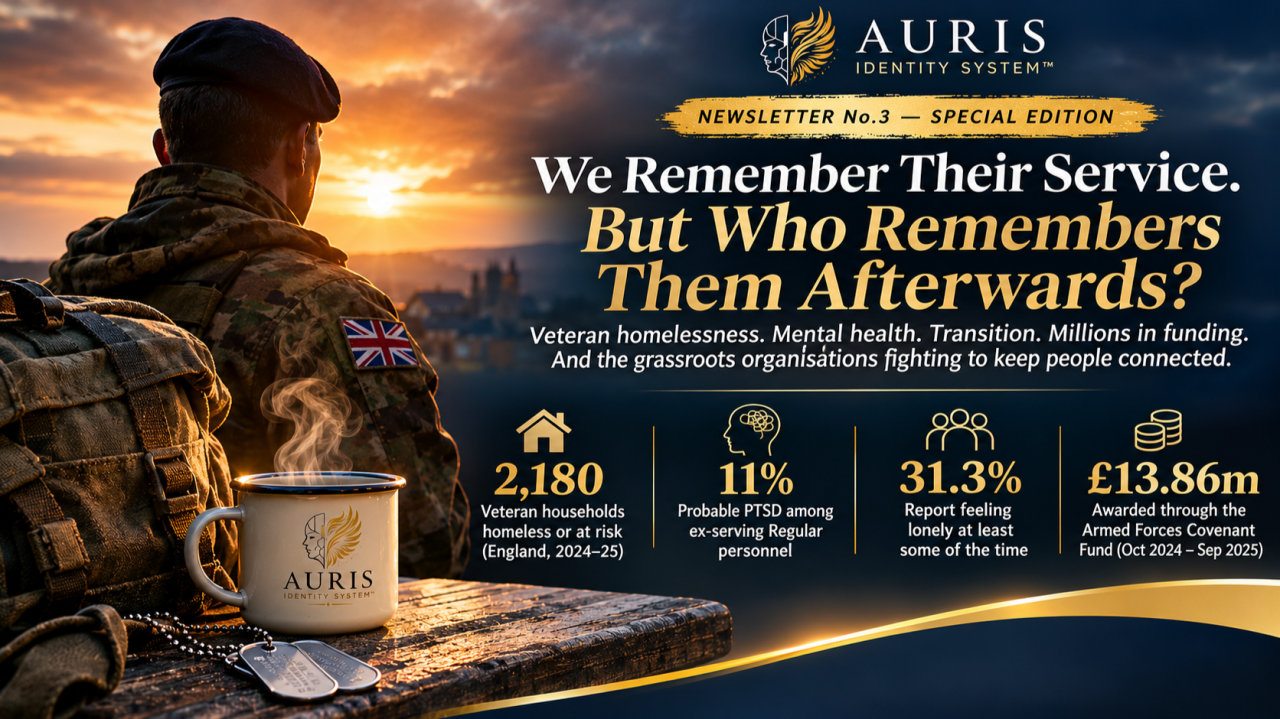
A reflection on veteran housing, mental health, funding and community support, with sources, clear limits and questions about life after military service.
Read this Insight →Essay · 24 October 2026
Identity and belonging after leaving a role, with dated community consultation findings, practical reflection and two separate research invitations.
Read this Insight →Practical pages to use alongside the reading: how to find your way through the hub, what the words mean, how the framework fits together, and the papers behind it.
ONE USEFUL NEXT STEP
Try a practical exercise, browse support near you, or use Find My Way if you would like space to reflect. Sharing your circumstances is optional.
This library provides education and research context. It does not provide a diagnosis, an individual clinical assessment or evidence that AURIS tools work for everyone.
AURIS Weekly and a monthly newsletter with learning, research and practical tools.